Designed for Rātā. Shaped by Time.
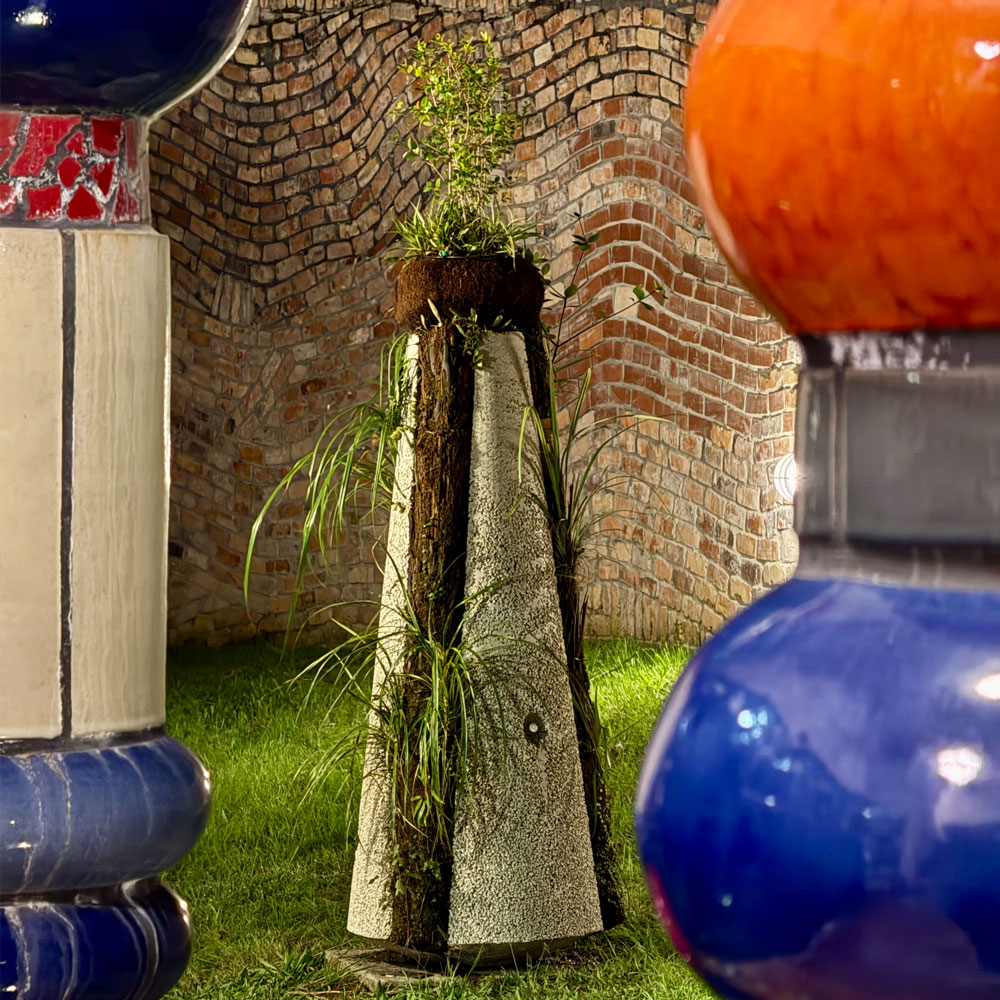
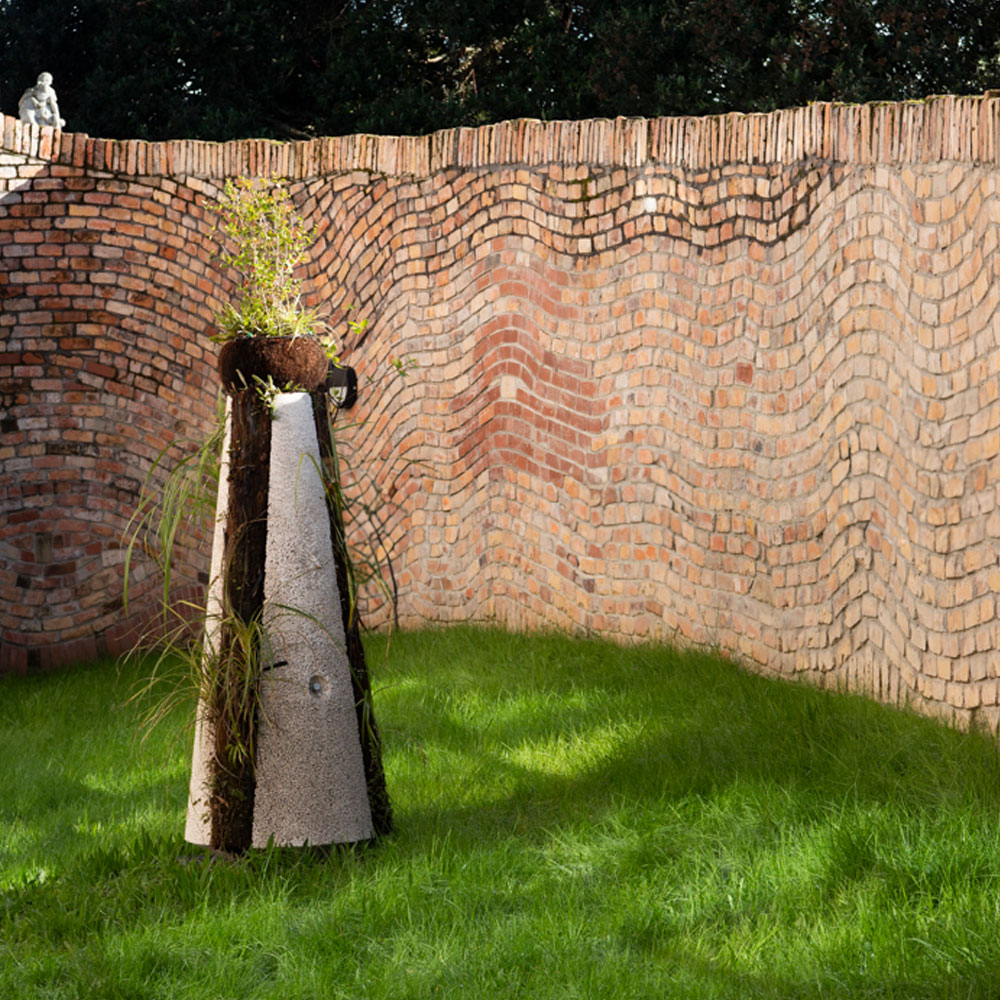
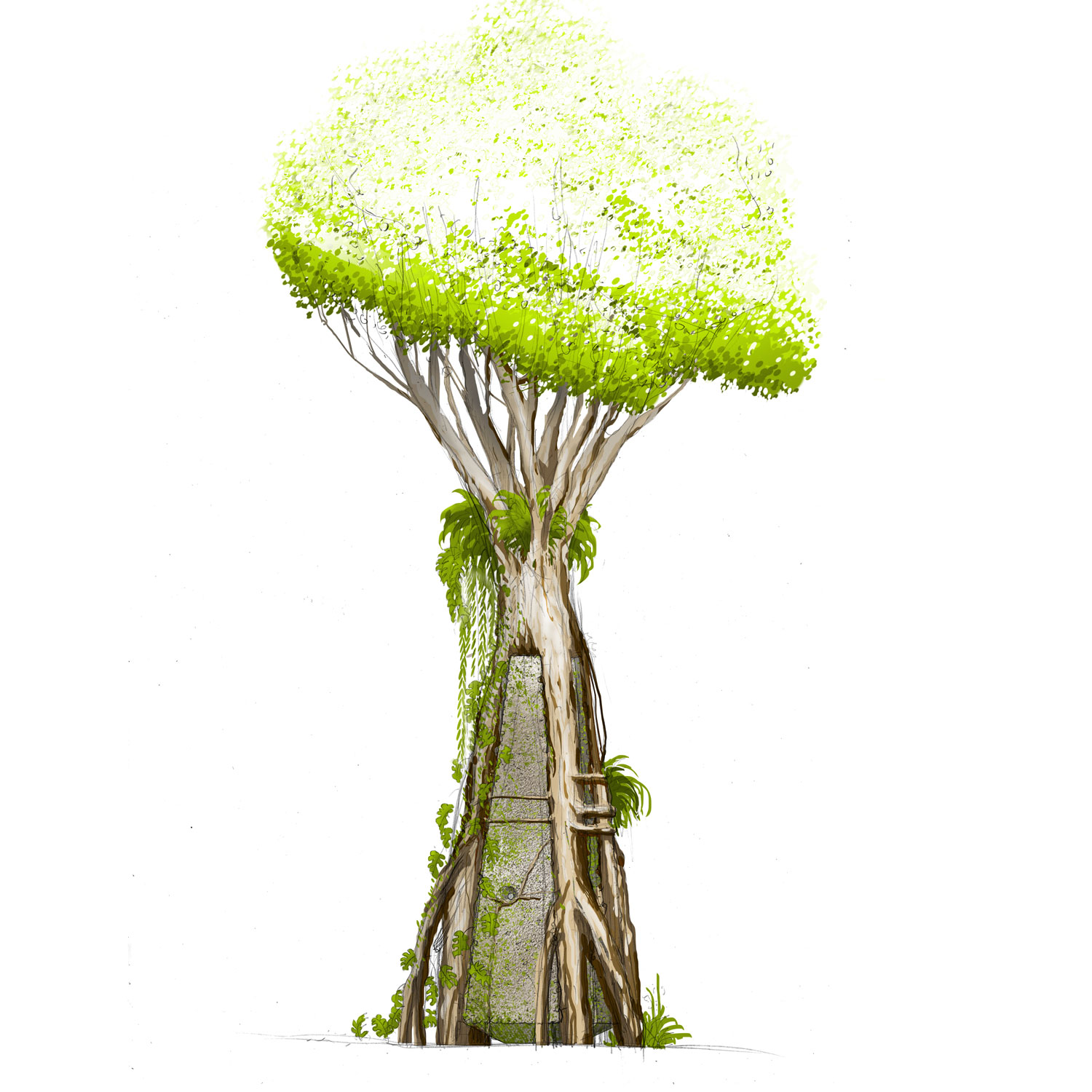
Rātā Bomb is a living sculpture from the Treebone series of Rātā Shrine ecological sculptures designed by Adam Ellis. Designed specifically for New Zealand’s remarkable epiphytic rātā, each sculpture is intended to transform. Over decades, descending roots envelop the support structure, transforming sculpture into a living tree and ecosystem.
A response to Hundertwasser
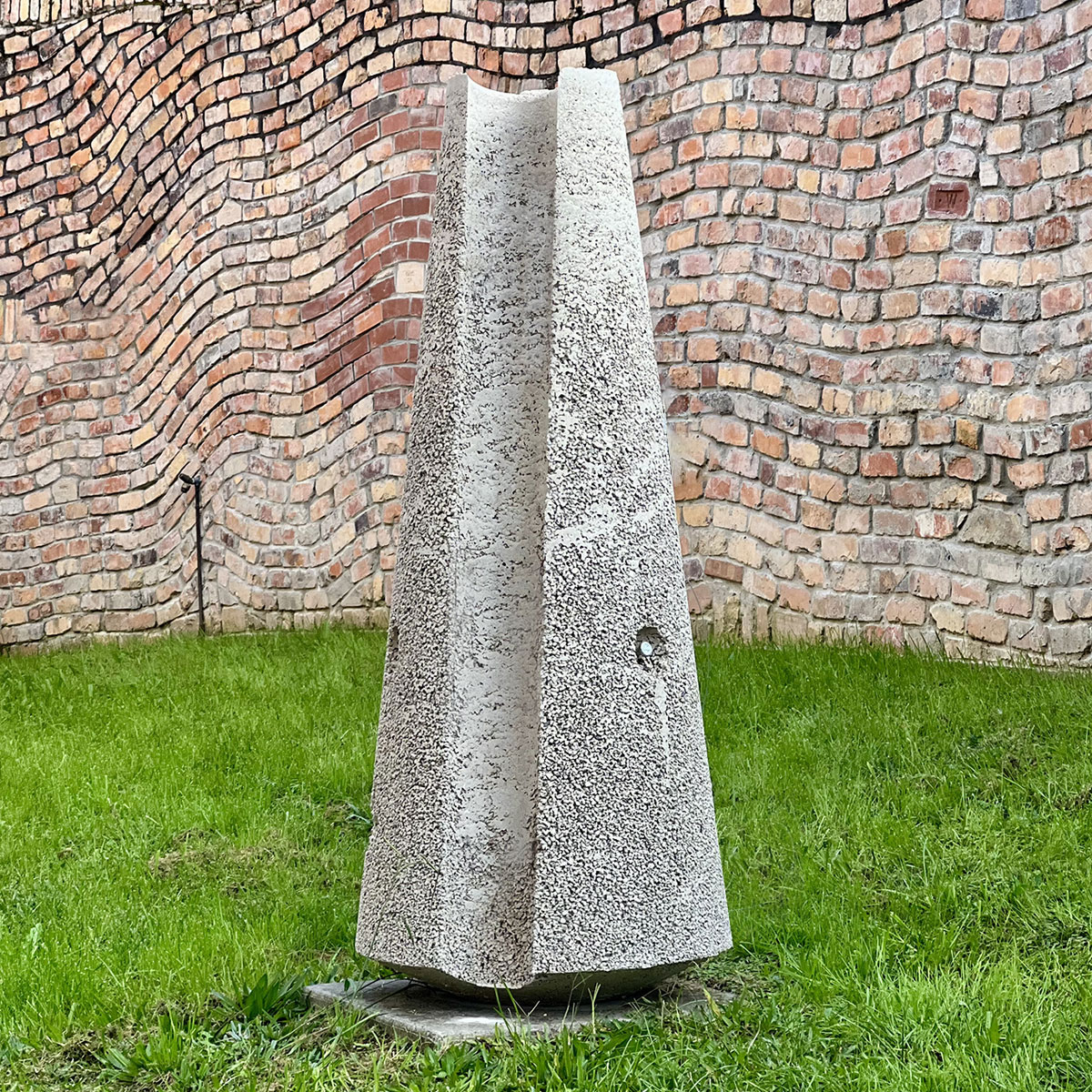
Created for the Hundertwasser Art Centre, Rātā Bomb responds to Friedensreich Hundertwasser’s 1980 artwork Plant Trees – Avert Nuclear Peril. It takes his message literally, transforming the iconography of the nuclear warhead into an instrument of ecological regeneration. A symbol of technological destruction is now a carrier of life. The warhead becomes a tree-delivery device—a Rātā Bomb.
Designed for Rātā
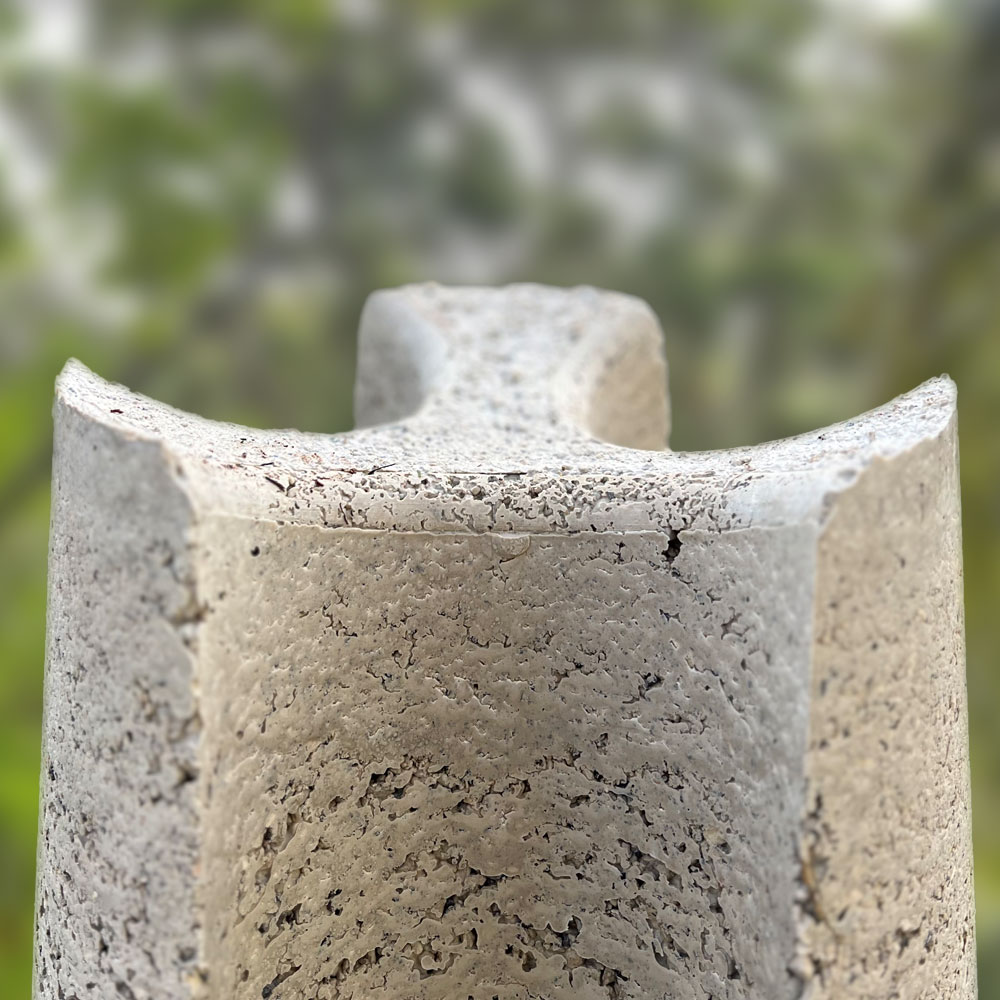
Cast from pumiceous concrete that stores water and nurtures life, the sculpture recreates the conditions in which epiphytic rātā naturally establish high in the canopy of mature forest trees.
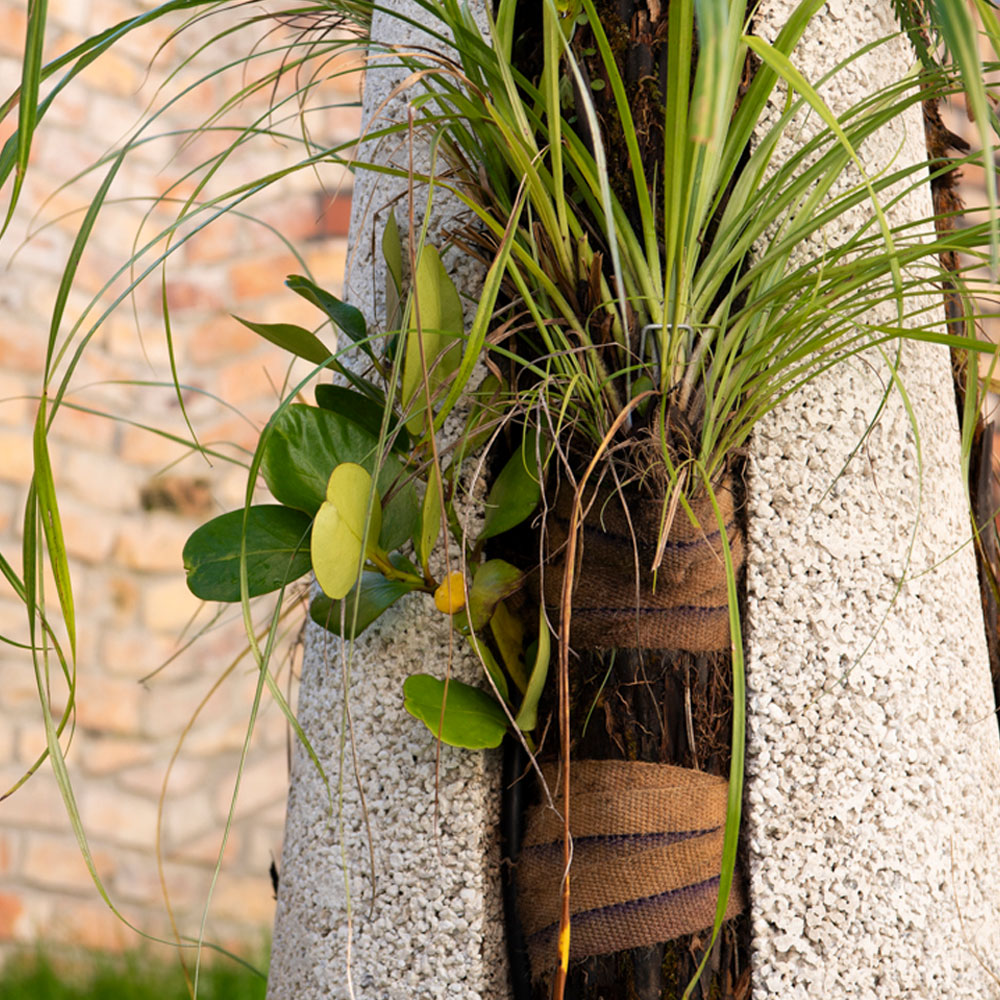
A shallow bowl form captures rainfall while overflow channels lined with tree fern fibre guide moisture downward, encouraging aerial roots to follow the sculpture to the ground. As the roots establish, they thicken, merge and eventually envelop the structure, creating a living sculpture unique to every installation.
Why Rātā?
Rātā are among New Zealand’s most extraordinary trees.
Rather than germinating in the ground, they begin life high in the crowns of mature forest trees. Their aerial roots slowly descend in search of earth, eventually forming a massive trunk of fused roots around their host. Over centuries, the original tree is replaced and the rātā becomes a forest giant in its own right.
The sculpture celebrates this ecological story, over years, displaying the process and revealing the sculptural root formations. It also performs structurally like a foundation, skeleton or bone, a Treebone, supporting, guiding, and, to some extent, dictating the shape of the Rātā. The result is a strong, sculptural architectural tree form.
Rātā Moehau
At the heart of this sculpture grows Rātā Moehau (Metrosideros bartlettii), the Cape Reinga white rātā. A taonga species to Ngāti Kuri, it is critically endangered in the wild and found naturally only at the very tip of Te Hiku o Te Ika-a-Māui.
Commission a Living Sculpture
Each sculpture is individually cast and planted for its site. Memorial and customised editions can incorporate embossed text or symbols cast into the concrete plinth. Planting is tailored using local eco-sourced epiphytic species suited to the climate and location.
If you think you have a location suitable for a Rātā Shrine, please get in touch to arrange a site assessment.
Enquire